
Notebook Entry ...Father Christmas
Father Christmas or Santa Claus on his sleigh or rather his motorised float with his Rotarian helpers driving round our village collecting on behalf of worthy causes at this festive season of the year.

An old Rotarian charitable tradition and a small reminder of one of the real meanings of Christmas, to give with no expectation of anything in return.
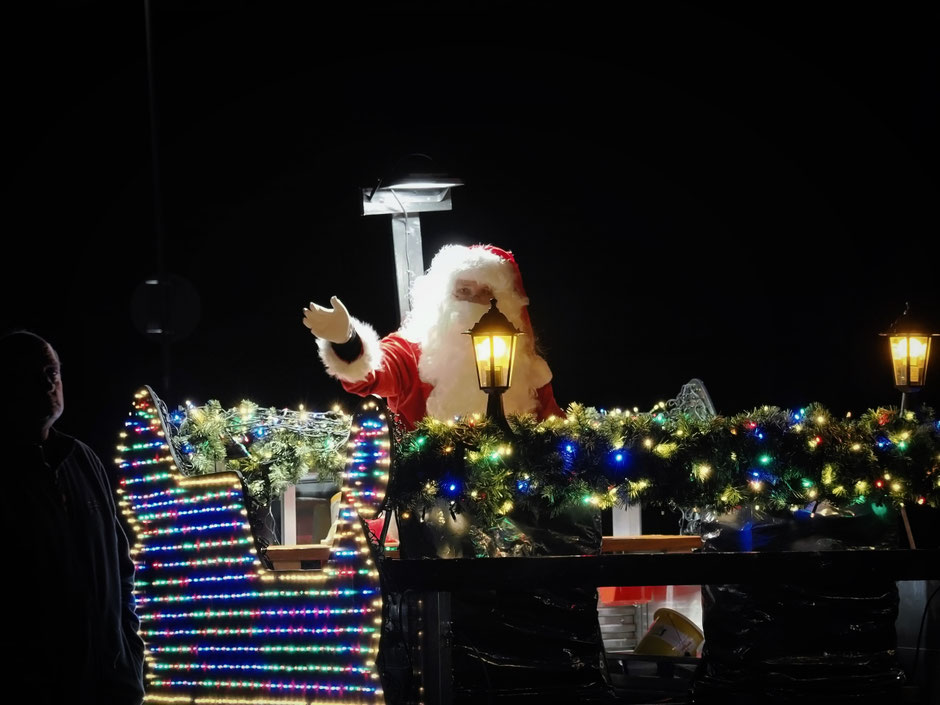
Saint Nicholas was legendary for his habit of secret gift giving which gave rise to the folklore of Santa Claus ("Saint Nick") through the derivative Sinterklaas. This Germanic tradition of the spirit of Christmas imported by the central European migrations into the Americas, was subsequently brought to Britain via the USA in the 1850's.
The name Father Christmas (strictly Old Father Christmas) wasn't coined until the 17th century, however it represented a much older and unrelated English folkloric tradition. This, and by association he, was connected with an ancient practice of feasting, wassailing, decking the halls with holly, ivy and mistletoe, bringing in the the Yule log and often days of riotous merrymaking at Christmastide. This in itself was likely a continuation of the even older pre-Christian mid-winter celebrations. It was not at all a child centric gift giving tradition.
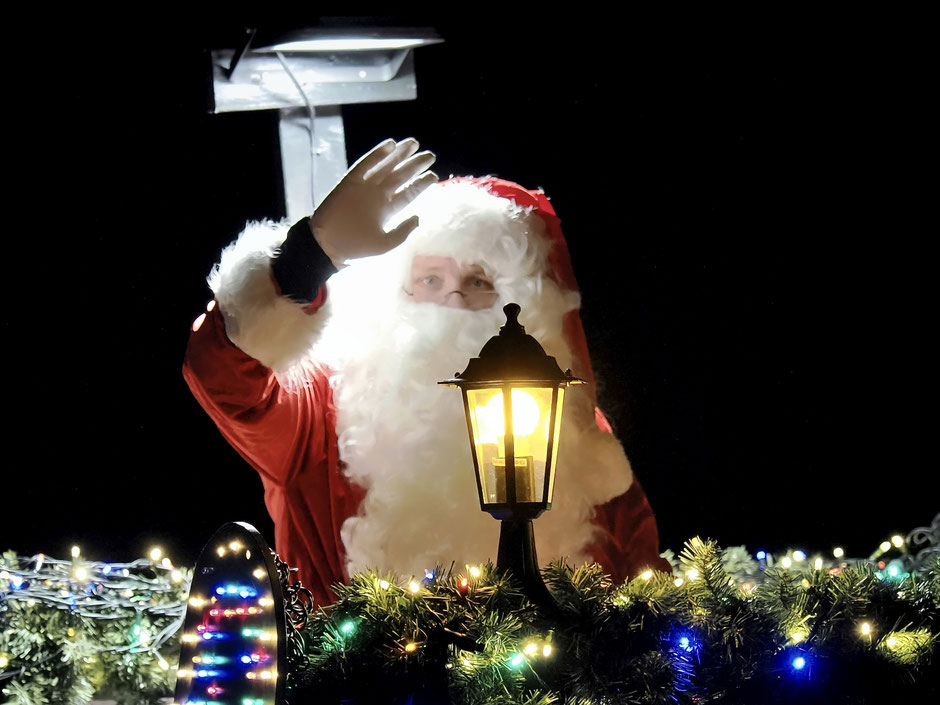
So how did Father Christmas and Santa Claus become synonymous? By the 1880s the new custom of gift giving at Christmas imported from the USA had become established, with its night time visitor sometimes being known as Santa Claus and sometimes as Father Christmas. The distinction between the two largely faded in the early years of the 20th century and these days the terms are accepted as synonymous.
Interestingly, much of the feasting elements of the old Father Christmas are still retained to this day with Christmas dinner or Christmas-Eve celebrations depending on your tradition but the old 12 days of Christmas style of carousing along with the Lords of Misrule overseeing them have all long gone.